

The November peak. The December cost.
After a year heads-down building new reporting tools, it’s been good to get back round the table with media agencies. The conversations are more joined-up than ever: planning and buying built around commercial outcomes, not channel by channel.
That thinking matters most right now. After a quiet September for many brands, I expect BFCM discounting to run deeper this year. But at what cost?
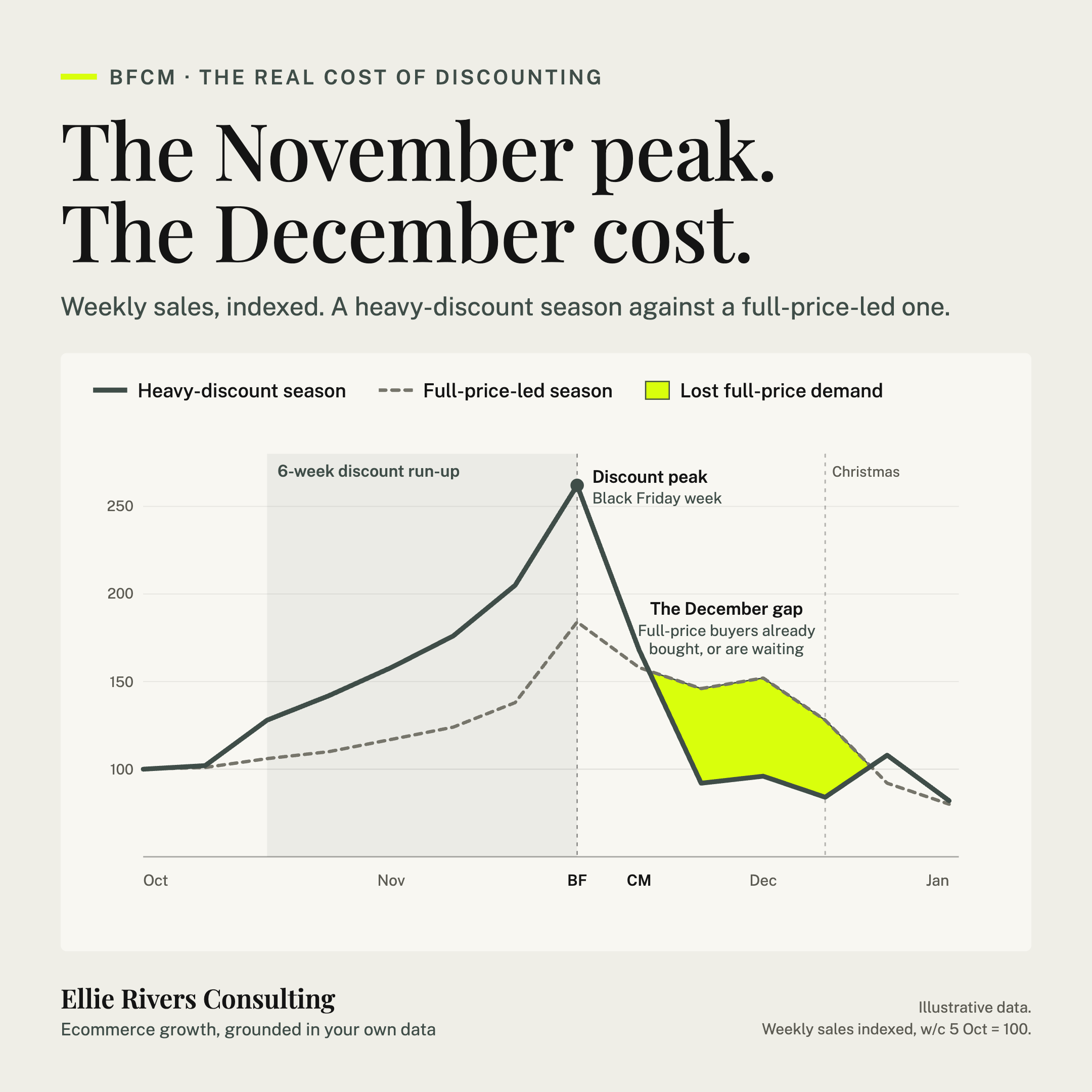
I worked with a brand whose busiest trading of the year was the six weeks before Black Friday. Heavy discounting delivered big headline numbers. Then the cost arrived.
Customers who would have bought at full price after Cyber Monday had already bought on discount, or decided to wait for the next one. The gap between Cyber Monday and Christmas went soft, full-price sales fell away, and Christmas promotions had to start earlier to fill it.
That’s the cycle: demand pulled forward, margin given away on sales that would have happened anyway, and customers taught to wait for the offer. Its effects last long after the Christmas trees come down.
None of this shows up if you judge BFCM on November revenue alone. It shows up in full-price sell-through, margin after discount, the December trough against last year, and how promo-acquired customers behave in the months that follow. It’s why I built a single-view report that brings trading, marketing and customer data into one place.
If you’d like to see what your discounting really did to your longer-term revenue, get in touch here.
